What Body Tone Really Means
“Tone” describes how muscle and body fat contribute to your appearance. It is not a separate type of muscle or a special kind of workout. We begin by understanding what you want to change and whether body recomposition is the right approach for you.
Definition comes from the relationship between muscle and body fat.
Resistance training helps you develop and maintain muscle. Nutrition, activity and recovery support the wider plan. Depending on your starting point, body recomposition may involve changes in both muscle and body fat, or it may make more sense to focus on one goal at a time.
New or returning to training
If you are starting resistance training or returning after a break, building strength and improving body composition together may be a useful approach. We begin with manageable training and nutrition habits that suit your starting point.
Already training consistently
If you already train regularly, changes in muscle and body fat may be more gradual. We review your programme, nutrition and recovery to decide whether working on both together suits your goals.
When a more focused phase may help
If you are already lean and well trained, a more focused phase, such as building muscle first, may be more practical than trying to change both at once. We choose the approach around your priorities, health and ability to recover.
Your assessment helps decide the approach.
Why Progress Can Feel Unclear
The scale, the mirror and your training can tell different stories. I look at them together, alongside your routine and goals, before deciding what needs to change.
What you notice
What I look at
The scale barely changes
Strength, relevant measurements and longer-term weight trends, where these are useful and agreed with you.
Plenty of cardio, little change in definition
I review your resistance training, nutrition and recovery, alongside the amount and type of cardio you do, to understand how they support your goals.
Training happens in stops and starts
Whether the plan fits your week, how manageable the sessions are and what interrupts consistency. Then we adjust the routine so regular training is easier to keep up.
Food advice keeps conflicting
I start with your usual eating habits, preferences and goals. Together, we identify practical adjustments you can follow and review how they support your training and progress.
Four Elements. One Personal Plan.
Resistance training, nutrition, cardio and recovery all have a role. Your plan brings them together in a way that suits your goals, experience and everyday life.
Resistance Training
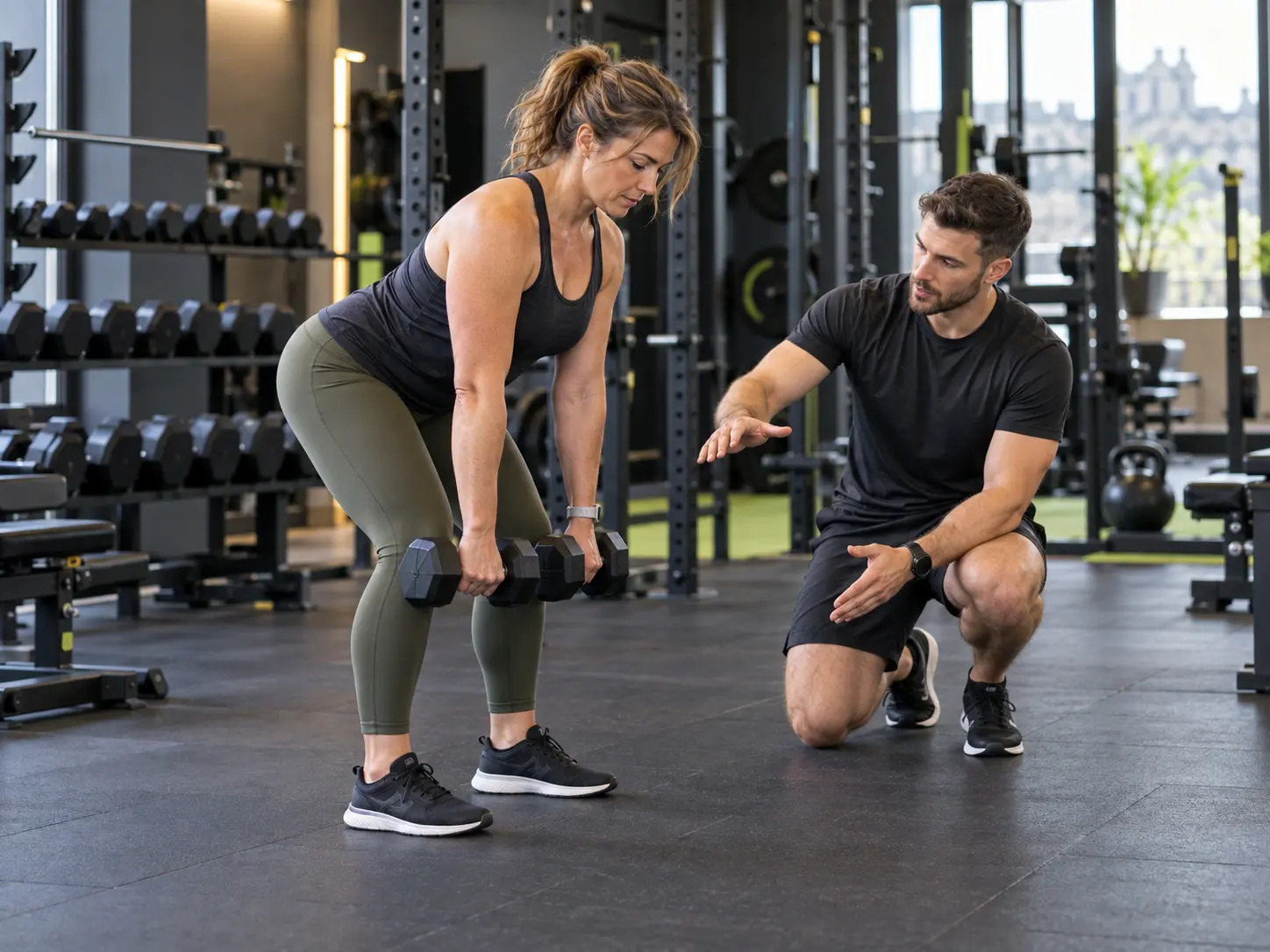
Build and maintain muscle through exercises matched to your experience and movement. We develop technique and progress the training as your strength and confidence grow.
Practical Nutrition
Establish eating habits that support training and your body-composition goals. If reducing body fat is appropriate, a modest energy deficit may help. It isn’t the starting point for everyone.
Sustainable Cardio
Support cardiovascular fitness with activity you can sustain. The type and amount fit alongside your resistance training, preferences and recovery.
Recovery
Make room for sleep, rest and manageable training demands. We adjust the plan when fatigue, soreness or life pressures affect your ability to train consistently.
The balance changes with you: we review what is working and adjust what needs attention.
A Clear Starting Point. A Plan That Evolves.
We begin with your goals and current routine, establish a useful starting point, then review how the plan is working as you train.
Your free 30-minute consultation is a conversation about your goals and options. The coaching assessment is a separate first step once you decide to start.
Assess
We discuss your training history, health considerations and priorities. In person, I look at movement and exercise technique and agree any useful baseline measures with you. Online, we establish your starting point through discussion, training records and suitable video feedback.
Plan
We build a manageable combination of resistance training, nutrition habits, cardio and recovery around your goals and weekly availability.
Train
Practise the exercises, develop technique and record your training. We progress the programme according to your performance and recovery.
Review
We look at training, consistency and any agreed body measures as trends. We adjust the plan when the evidence suggests a change would help.
Review feeds back into Plan.
Recognise Progress. Know What to Review.
Progress can show up in your training, your routine and, where relevant, your body measurements. We look at these together over time rather than judging one weigh-in or one workout.
Performance
Changes in strength, repetitions, technique and how confidently you complete your training.
Body Measurements
Weight, waist measurements or photos, where useful and agreed with you. These are optional and read as trends over time.
Consistency
How regularly you train, follow manageable nutrition habits and recover between sessions.
Experienced Coaching. Personal Attention.
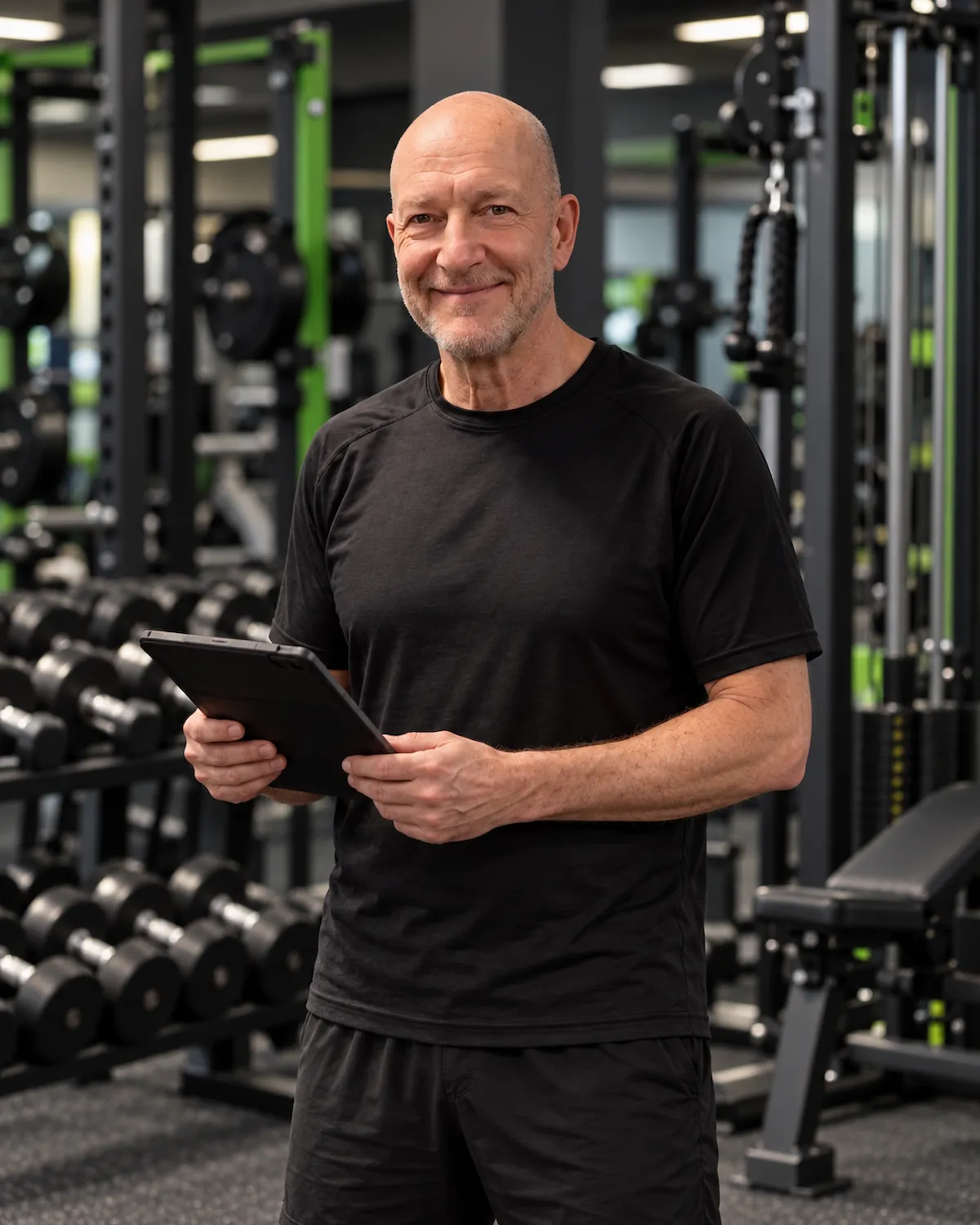
I’m Nikos Moumouris, a coach with more than 30 years’ experience across physical education, strength and conditioning, and personal training. I bring that experience to understanding your starting point, explaining your programme and adapting it as you progress.
Level 4 Strength & Conditioning Coach
Resistance-training programme design and progression.
NASM Nutrition Coach
Practical nutrition habits that support your goals.
NASM Physique & Bodybuilding Coach
Training and nutrition for muscle development and body composition.
Degree in Physical Education & Sport Science
A broad foundation in exercise, movement and coaching.
Also qualified as a NASM Corrective Exercise Specialist.
In-person coaching takes place at JD Gyms Edinburgh Chesser, with online coaching available.
Different Ways to Train. The Same Personal Approach.
Coaching can take place in person, through a combination of coached sessions and independent training, or entirely online.
IN PERSON
1-to-1 Coaching
Train with me at JD Gyms Edinburgh Chesser, with guidance on technique, exercise selection and progression during your sessions.
Direct coaching during your training.
IN PERSON & ONLINE
Hybrid Coaching
Combine in-person coaching with a structured programme for your independent training, with check-ins to review progress and adjust the plan.
Support in the gym. Structure between sessions.
ONLINE
Online Programme
Follow a Personalised Online Training Programme over four weeks through Trainerize, with weekly check-ins to review your training and discuss adjustments.
Structured training wherever you train.
We’ll discuss your starting point in the consultation, and I’ll recommend the approach that fits your needs.
Body Tone Questions. Clear Answers.
Answers to common questions about training, body composition and how we assess progress.
THE SHORT ANSWER
Your starting point matters.
There is no single “toning” workout. We bring together resistance training, practical nutrition, appropriate cardio and recovery around your goals, then review how you respond.
Will lifting weights make me bulky?
Building substantial muscle usually takes sustained training over time. We choose the programme around your goals and review how you respond. You do not need to train like a bodybuilder to benefit from resistance training.
Does my weight have to change?
No. Depending on your starting point and goals, progress may involve building muscle, reducing body fat or improving strength while your weight stays similar. We agree which signs of progress matter to you.
Do I need cardio?
Cardio can support fitness and health alongside resistance training. The amount and type depend on your current activity, preferences, goals and recovery. It does not need to dominate your programme.
How is progress assessed?
We review training performance, consistency and recovery, alongside optional measurements or photos agreed with you. We look at trends over time rather than judging individual readings.
Is this suitable for beginners and for people who already train?
Both beginners and experienced trainees can benefit from a structured approach. Your starting point affects how we plan your training. Sometimes a more focused muscle-building or fat-loss phase may suit your goals better.
How long before I notice progress?
There is no fixed timeline. Your training background, consistency, nutrition and recovery all influence progress. We review your response over time and adjust the plan rather than promise a result by a particular date.
Let’s Find Your Starting Point.
In your free consultation, we’ll discuss your goals, current routine and what’s getting in the way. I’ll help you identify a practical starting point and recommend how coaching could support you.